 HAOCOOL

Pharmaceutical Cold Chain Warehousing Construction Plan
The construction of pharmaceutical cold chain warehousing is a critical component of processes such as pharmaceutical distribution, medical device delivery, vaccine storage, and the management of biological products. Unlike standard cold storage, pharmaceutical cold chain warehousing requires not only stable temperatures but also traceability across humidity control, monitoring, alarm systems, data logging, validation, and management workflows. A compliant cold chain warehousing system must feature rational zoning based on specific drug storage requirements and ensure temperature control safety through appropriate equipment configuration and management protocols.
1. Key Considerations Before Constructing Pharmaceutical Cold Chain Warehousing
Before building a pharmaceutical cold chain warehousing system, it is essential to clearly define the types of products to be stored. Different pharmaceuticals have varying temperature requirements; some necessitate a refrigerated environment of 2°C to 8°C, others require cool storage, and some products demand freezing or specialized temperature control conditions. Failure to determine product categories, temperature zones, turnover volumes, and inbound/outbound frequencies at the planning stage can lead to issues such as insufficient storage capacity, significant temperature fluctuations, and excessive energy consumption.
Secondly, the specific usage scenario for the warehouse must be defined. Pharmaceutical cold chain facilities may serve pharmaceutical wholesalers, third-party medical logistics providers, hospital pharmacies, vaccine distribution centers, or warehouses for in vitro diagnostic (IVD) reagents. Each scenario entails different requirements regarding storage area size, loading/unloading docks, buffer zones, inspection areas, return areas, and dispatch zones. Therefore, the design plan should not be based solely on square footage but must be tailored to actual operational workflows.
2. Temperature-Controlled Zoning Design for Pharmaceutical Cold Chain Warehousing
Temperature-controlled zoning is the core of pharmaceutical cold chain warehousing system design. Common zones include refrigerated areas, cool storage areas, ambient temperature areas, freezing areas, inspection areas, return areas, non-conforming product areas, and temporary dispatch holding areas. Independent temperature ranges should be established for each zone in accordance with pharmaceutical storage requirements to prevent the commingling of products requiring different temperature conditions.
Refrigerated areas are typically used for pharmaceuticals, vaccines, biological products, and certain diagnostic reagents that require low-temperature storage. This area requires high temperature stability; therefore, it must be equipped with a stable refrigeration system, insulated storage structures, temperature and humidity monitoring equipment, and an anomaly alarm system. "Cool" zones are generally used for medicines that are sensitive to high temperatures but do not require refrigeration; the priority here is controlling the ambient temperature and preventing exposure to direct sunlight or heat sources.
For products requiring freezing, a separate freezing zone must be established, with careful attention paid to insulation thickness, floor frost protection, door sealing, and defrosting methods. Although the areas designated for goods awaiting inspection, returns, and non-conforming products may not be large, they are critical to pharmaceutical warehouse management; they must be clearly marked, physically separated, and have clearly defined workflows to prevent the mixing of different products.
3. Key Considerations for Storage Structure and Refrigeration System Configuration
The structure of a pharmaceutical cold chain warehouse must offer excellent thermal insulation and sealing performance. Factors such as panel thickness, insulation materials, moisture barriers, floor insulation, and door seals all impact temperature stability. Since frequent door openings in refrigerated and frozen storage areas can cause temperature fluctuations, buffer zones, air curtains, or high-speed doors should be installed—depending on the frequency of entry and exit—to minimize the influx of warm outside air.
Refrigeration system specifications must be calculated based on storage capacity, temperature zones, thermal load of the goods, door-opening frequency, and local climatic conditions. Simply selecting units based on floor area is inadequate and can lead to issues such as slow cooling, unstable temperatures, and equipment operating under high loads for extended periods. For critical pharmaceutical cold chain projects, backup units or emergency cooling solutions should also be considered to enhance system reliability.
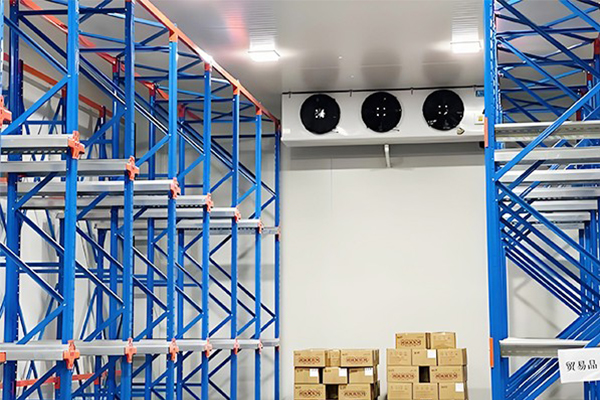
Evaporator placement is also crucial. Fan positioning should avoid blowing directly onto pharmaceutical packaging sensitive to airflow, while ensuring uniform air circulation within the warehouse to minimize localized temperature variations. Racking layouts must allow for return-air channels; medicines should not be placed directly against walls, ceilings, or air outlets, as this could interfere with temperature monitoring and the distribution of cooling capacity.
4. Automated Temperature and Humidity Monitoring and Alarm Systems
Pharmaceutical cold chain warehousing systems should not rely solely on manual checks of thermometers; instead, they should be equipped with automated temperature and humidity monitoring systems. Monitoring points should be strategically positioned based on the storage area's size, equipment layout, temperature-sensitive zones, and airflow patterns, with particular attention paid to air supply and return vents, areas near warehouse doors, and the highest and lowest points of the racking systems.
The temperature and humidity monitoring system must feature continuous recording, data storage, anomaly alarms, and data query/export capabilities. If temperatures deviate from the preset range, the system should promptly notify management via audible and visual alarms, SMS messages, or system alerts. This enables timely intervention during the early stages of a temperature excursion, thereby mitigating risks to pharmaceutical quality.
In pharmaceutical cold chain warehousing, data logging serves not only internal management needs but also provides a crucial basis for quality traceability. Consequently, temperature and humidity records must be complete, accurate, and readily retrievable; issues such as missing records, improper manual data entry, or unaddressed alarms must be avoided.
5. Key Points for Validation, Operation, and Maintenance
Upon completion of a pharmaceutical cold chain warehouse, it cannot simply be powered on and cooled down before being put into service. Prior to official use, validation tests—such as empty-load, full-load, or simulated operation tests—must be conducted to observe temperature distribution across various locations, cooling rates, the impact of door openings, and equipment operating status. Validation helps identify issues such as insufficient cooling capacity, airflow dead zones, or suboptimal monitoring point placement, allowing for adjustments before actual pharmaceutical storage begins.
Daily management requires the establishment of protocols for warehouse inspections, equipment maintenance, temperature and humidity logging, anomaly handling, and emergency response. Refrigeration units, air coolers, door seals, drainage systems, sensors, and alarm devices require regular inspection. Backup power supplies, standby units, and emergency transfer plans must also be tested periodically to ensure their functionality in the event of an actual emergency.
Personnel training is equally critical. Warehouse staff must understand the storage requirements for different pharmaceuticals and master procedures for stock intake and dispatch, protocols for handling temperature excursions, and standards for record-keeping. Only when equipment, systems, and personnel management are effectively aligned can pharmaceutical cold chain warehousing maintain long-term, stable operation.
6. Controlling Costs in Pharmaceutical Cold Chain Warehouse Construction
The construction costs for pharmaceutical cold chain warehouses depend on factors such as storage area, the number of temperature zones, insulation materials, refrigeration equipment, monitoring systems, racking configurations, and construction standards. A greater number of temperature zones and stricter management requirements will lead to higher construction costs. When planning, enterprises should avoid prioritizing low costs above all else; instead, they should comprehensively consider long-term energy consumption, maintenance expenses, equipment lifespan, and risks to pharmaceutical safety.
An effective way to control costs is to conduct a thorough needs analysis during the initial planning stage. For instance, determine the types of products to be stored and their turnover volume before planning the warehouse area; design buffer zones based on actual inbound and outbound frequencies; and select appropriate refrigeration equipment and monitoring systems based on temperature zone requirements. This approach prevents under-provisioning while also avoiding unnecessary, redundant investments.
7. Pharmaceutical Cold Chain Warehouse Construction
When constructing pharmaceutical cold chain warehouse systems, the focus should extend beyond cold storage area and equipment prices to include the rationality of temperature-controlled zoning, the continuity of temperature and humidity monitoring, the adequacy of emergency measures, and the traceability of management processes. For different stored items—such as pharmaceuticals, vaccines, biological products, and diagnostic reagents—the configuration of refrigerated, cool, ambient, frozen, or quarantine zones should be determined based on product specifications and actual turnover methods.
When planning these facilities, enterprises are advised to first clarify product categories, temperature ranges, average daily inbound/outbound volumes, distribution radii, and regulatory requirements before designing the insulation structure, refrigeration system, automated monitoring, backup power supply, and validation protocols. Only by integrating hardware infrastructure with robust management systems can the pharmaceutical cold chain warehouse operate stably over the long term and minimize quality risks associated with temperature fluctuations.
FAqS
Precise temperature control helps maintain the quality, safety, and effectiveness of pharmaceutical products during storage and distribution.
Key requirements include reliable refrigeration systems, accurate temperature monitoring, backup power protection, proper insulation, and compliance with pharmaceutical storage standards.
Pharmaceutical warehouses usually require stable refrigeration systems with automatic control, continuous monitoring, alarm functions, and reliable operation to ensure safe product storage.