 HAOCOOL

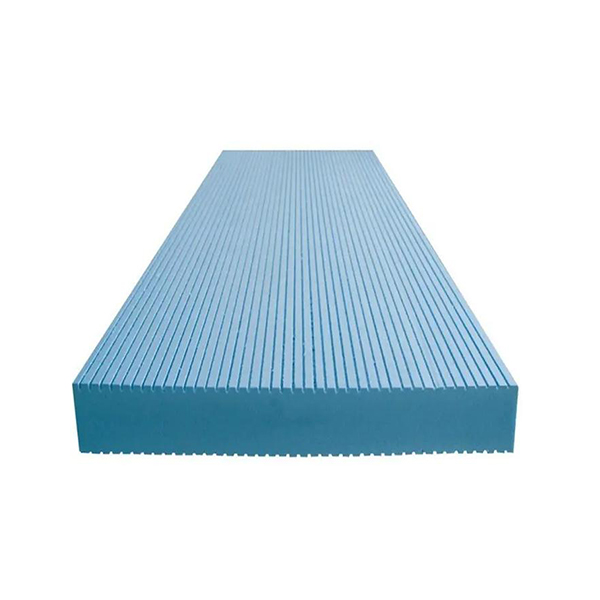
Extruded Polystyrene Cold Room Panels (XPS) – High Strength Thermal Insulation Sandwich Panels


Product Introduction
Extruded Polystyrene Cold Room Panels (XPS insulated sandwich panels) are high-performance insulation panels designed for cold storage facilities, refrigerated warehouses, food processing plants, and temperature-controlled environments requiring excellent thermal insulation and moisture resistance.
XPS cold room panels consist of a rigid extruded polystyrene foam core bonded between two protective metal sheets. The closed-cell XPS structure provides low water absorption, high compressive strength, and stable thermal insulation performance, making it an ideal insulation solution for demanding cold storage applications.
Compared with traditional insulation materials, XPS panels offer superior moisture resistance and mechanical strength. They are widely used for cold room walls, ceilings, floors, partitions, and special refrigeration structures where long-term durability and insulation reliability are required.
Product Features
Excellent Thermal Insulation Performance
XPS foam has a fine closed-cell structure that effectively reduces heat transfer. Its low thermal conductivity helps maintain stable temperatures inside refrigerated rooms and improves the overall energy efficiency of refrigeration systems.
Outstanding Moisture Resistance
The closed-cell structure of XPS provides very low water absorption compared with many conventional insulation materials. This feature makes XPS panels particularly suitable for humid environments, freezer rooms, and applications where insulation materials may be exposed to moisture.
High Mechanical Strength
XPS insulation has excellent compressive strength and dimensional stability. The strong structure helps the panels maintain their shape and performance under long-term loading conditions, making them suitable for cold room floors and heavy-duty refrigeration applications.
Durable and Long Service Life
XPS panels maintain stable insulation properties over a wide temperature range. Their resistance to moisture, deformation, and environmental impact contributes to long-term reliability in cold storage systems.
Easy Installation and Customization
The modular sandwich panel structure allows quick installation and flexible design. Panel thickness, dimensions, surface materials, colors, and connection systems can be customized according to different project requirements.
Technical Parameters
| Parameter | Specification |
|---|---|
| Product Type | Extruded Polystyrene Cold Room Panel |
| Insulation Material | Extruded Polystyrene (XPS) Foam |
| Core Structure | Closed-cell rigid foam insulation |
| Panel Thickness | 50mm / 75mm / 100mm / 120mm / 150mm / 200mm |
| Core Density | Approximately 30–45 kg/m³ |
| Thermal Conductivity | Approximately 0.028–0.035 W/(m·K) |
| Water Absorption | Very low moisture absorption performance |
| Compressive Strength | High mechanical strength structure |
| Surface Material | Color-coated steel / Galvanized steel / Stainless steel |
| Metal Sheet Thickness | 0.3–0.8 mm |
| Surface Finish | Smooth, embossed or customized |
| Connection System | Tongue-and-groove or cam-lock joint |
| Application | Cold rooms, freezer rooms, refrigerated warehouses |
| Installation Method | Modular assembly system |
| Customization | Available according to project requirements |
Technical specifications may vary depending on raw materials, manufacturing standards, and customer requirements.
Main Applications
XPS cold room panels are widely used in:
- Frozen food storage facilities
- Cold chain logistics warehouses
- Meat and seafood processing plants
- Pharmaceutical cold storage rooms
- Agricultural product storage
- Industrial refrigeration facilities
- Commercial freezer rooms
- Food processing workshops
- Refrigerated distribution centers
- Cold room floor insulation systems
- High humidity refrigeration environments
Advantages of XPS Cold Room Panels
Superior Moisture Protection
Moisture infiltration can reduce insulation efficiency over time. The closed-cell structure of XPS provides excellent resistance against water absorption, helping maintain stable thermal performance in demanding environments.
Energy Saving Performance
High-quality XPS insulation reduces heat gain and helps refrigeration equipment operate more efficiently. This contributes to lower energy consumption and improved operating cost control.
Strong Structural Stability
The rigid foam core provides excellent load-bearing capability and resistance to deformation. This makes XPS panels suitable for applications requiring higher mechanical performance.
Reliable Low-Temperature Performance
XPS insulation maintains stable physical properties in cold environments, making it suitable for freezer rooms, low-temperature storage areas, and refrigeration facilities.
Flexible Cold Room Design
XPS panels can be customized for different project requirements, including wall panels, ceiling panels, floor insulation panels, and partition systems.
Customized XPS Cold Storage Solutions
We provide customized XPS cold room panel solutions based on:
- Cold room dimensions
- Required storage temperature
- Product storage conditions
- Installation environment
- Insulation thickness requirements
- Surface material requirements
- Project application
Our engineering team can provide professional recommendations for panel selection, cold room design, refrigeration matching, and installation solutions.
From small commercial refrigeration rooms to large industrial cold storage warehouses, XPS insulated panels provide excellent thermal protection, moisture resistance, and structural durability.
Related Cases

Shanghai Rongqing Logistics 20,000 m³ Low-Temperature Cold Storage Project
Shanghai Rongqing Logistics 20,000 m³ Low-Temperature Cold Storage Project The Shanghai Rongqing Logistics 20,000 m³ Low-Temperature Cold Storage Project is a large-scale frozen logistics warehouse constructed by HAOCOOL for Shanghai Rongqing International Storage and Transportation Co., Ltd. The project was designed for -20°C low-tempe...
View details
Beijing Coca-Cola Beverage Cold Storage Project
Beijing Coca-Cola Beverage Cold Storage Project The Beijing Coca-Cola Beverage Cold Storage Project is a professional food and beverage refrigeration project constructed by HAOCOOL for the storage of finished Coca-Cola beverage products. The project was completed in October 2016, with a construction period of approximately 30 days. The ...
View details
Fudan University Scientific Laboratory Low-Temperature Cold Storage Project
Fudan University Scientific Laboratory Low-Temperature Cold Storage Project The Fudan University Scientific Laboratory Low-Temperature Cold Storage Project is a specialized refrigeration engineering project designed and constructed by HAOCOOL for scientific research, laboratory sample preservation, plasma storage, and other low-temperat...
View details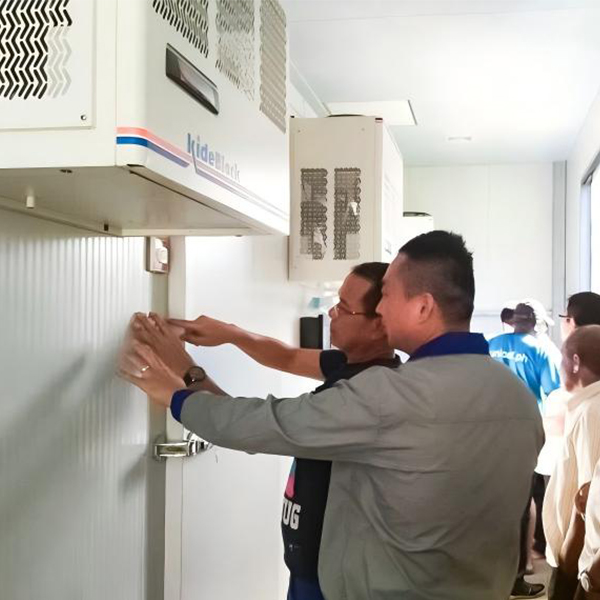
Philippines 2,000 m³ Coconut Cold Storage Project | Fruit Cold Room
Philippines 2,000 m³ Coconut Cold Storage Project | Fruit Cold Room The Philippines 2,000 m³ Fruit Cold Storage Project is a customized refrigeration facility developed for the preservation and export storage of coconuts. Located on Lagoon Island, Philippines, the project was designed to provide stable temperature control, reliable refr...
View detailsNEWS INFORMATION
 READ MORE
Does a Higher-Power Cold Storage Compressor Always Mean Faster Cooling?
0When designing a cold storage refrigeration system, many customers believe that choosing a compressor with higher power will always make the room cool down faster. However, refrigeration performance is not determined by compressor power alone....
-
READ MORE
How to Reduce Energy Consumption in Cold Storage Facilities in Hot and Humid Southeast Asia?
0Southeast Asia has a tropical climate characterized by high temperatures and high humidity throughout the year. For cold storage facilities operating in countries such as the Philippines, Thailand, Malaysia, Indonesia, and Vietnam, maintaining...
-
READ MORE
HAOCOOL Participates in AGRILINK 2026 in the Philippines, Showcasing Advanced Cold Storage and Cold Chain Solutions
0Building Connections in Southeast Asia and Supporting Modern Agricultural Cold Chain Development From October 8 to 10, 2026, HAOCOOL participated in AGRILINK – Agrilink Foodlink Aqualink, one of the leading agricultural, food, and aquacult...
-
READ MORE
How to Determine the Low-Temperature Storage Temperature for Hazardous Chemicals?
0The storage temperature of hazardous chemicals is not determined simply by choosing a lower temperature. It should be established according to the specific chemical properties, safety data, storage requirements, and applicable regulations. For...
-
READ MORE
What Is the Difference Between a Hazardous Goods Cold Storage Facility and a Standard Cold Storage Warehouse?
0Cold storage facilities are widely used for food, pharmaceuticals, chemicals, and other temperature-sensitive products. However, a hazardous goods cold storage facility has significantly different design and safety requirements from a standard...
-
READ MORE
Which costs more to build: a cold storage warehouse, a freezer warehouse, or a blast freezing warehouse?
0When planning a cold storage facility, users often compare the construction costs of cold storage warehouses, freezer warehouses, and blast freezing warehouses. Assuming similar storage capacity, building conditions, equipment brands, and cons...



loading...
已经是到最后一篇内容了!