 HAOCOOL
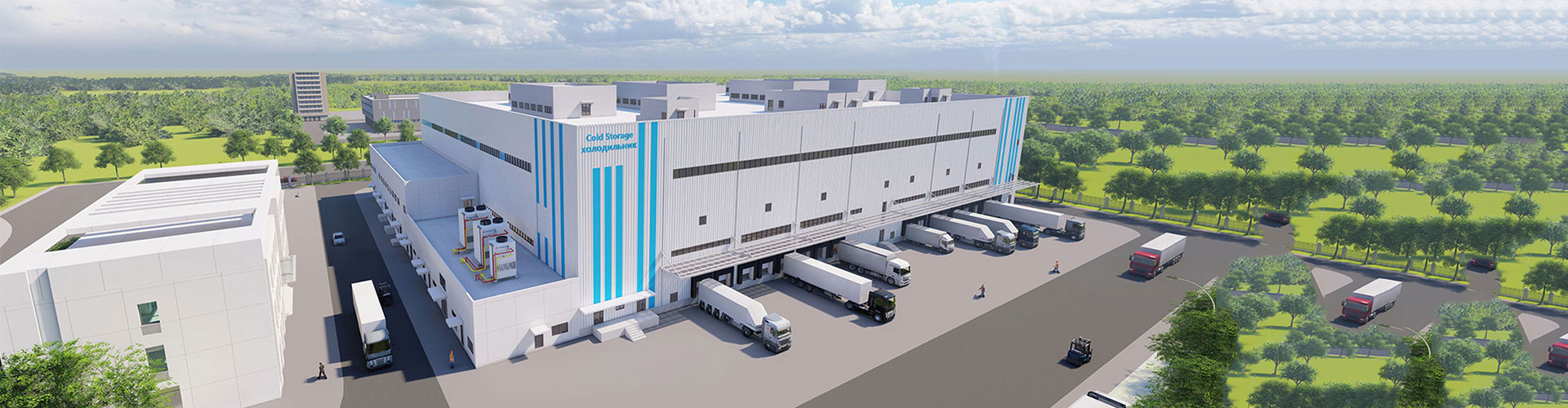
Which costs more to build: a cold storage warehouse, a freezer warehouse, or a blast freezing warehouse?
When planning a cold storage facility, users often compare the construction costs of cold storage warehouses, freezer warehouses, and blast freezing warehouses. Assuming similar storage capacity, building conditions, equipment brands, and construction scopes, blast freezing warehouses generally have the highest construction costs, followed by freezer warehouses, with cold storage warehouses being the least expensive. These price differences stem not only from the operating temperatures but also from factors such as the product's initial temperature upon entry, daily processing volume, required cooling time, insulation structure, and refrigeration equipment configuration.
1. What are the differences in purpose among these three types of cold storage?
Cold storage warehouses are primarily used for the low-temperature storage of fruits, vegetables, dairy products, beverages, flowers, and certain food ingredients. Typical operating temperatures range from 0°C to 10°C, with specific temperature and humidity settings determined by the product. Their main function is to maintain a suitable low-temperature environment to slow down the degradation of product quality.
Freezer warehouses are mainly used to store products that are already frozen—such as meat, seafood, pastries, and quick-frozen foods—typically at temperatures between -18°C and -25°C. Their primary role is to maintain the frozen state of the goods; they are not designed for the rapid freezing of large quantities of products starting at ambient temperature.
Blast freezing warehouses are primarily used in food processing. They are designed to rapidly cool and freeze meat, seafood, fruits, vegetables, or pastries within a specific timeframe, typically operating at temperatures between -30°C and -40°C. In addition to requiring very low temperatures, their refrigeration capacity must be configured based on factors such as the batch load size, product dimensions, and target freezing time.
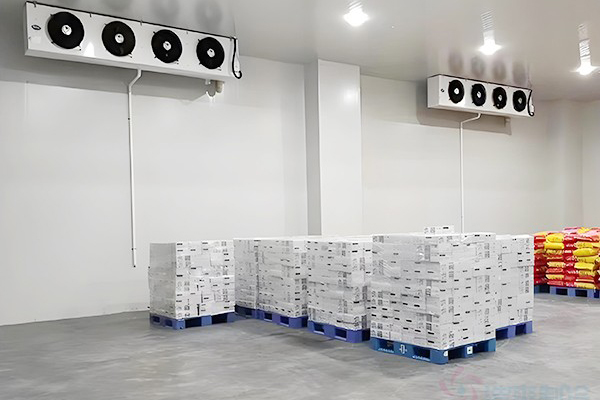
2. Why are blast freezing warehouses usually more expensive to build?
Blast freezing warehouses must extract sensible heat, latent heat of freezing, heat from packaging, and heat generated by equipment operation within a very short period. Even if the facility's dimensions are identical to those of a standard freezer warehouse, the required refrigeration capacity is often significantly higher.
Blast freezing warehouses typically require the installation of low-temperature compressor units, high-airflow air coolers, low-temperature-rated valves, and specialized defrosting and control systems. For projects with high processing volumes, configurations such as parallel compressor units, screw compressors, tunnel freezers, or spiral freezing equipment may be employed. As equipment capacity, electrical power requirements, and control specifications increase, so does the project cost.
It is important to note that a storage temperature of -35°C does not guarantee that the core temperature of the goods has reached -18°C. The actual freezing time must be calculated based on factors such as product type, thickness of individual units, spacing, initial product temperature, and airflow velocity.
3. Why is the cost of a freezer warehouse higher than that of a cold storage warehouse?
Freezer warehouses operate with a significant temperature differential between the interior and exterior, necessitating higher standards for thermal insulation systems compared to standard cold storage. In addition to requiring thicker insulation for wall and ceiling panels, the flooring design must incorporate insulation layers, vapor barriers, waterproofing, and measures to prevent frost heave.
In low-temperature environments, components such as warehouse doors, drainage pipes, and certain other piping may require heating or heat-tracing systems to prevent ice buildup on door frames and freezing within drains. Additional costs are also incurred due to the thicker insulation required for refrigerant piping, the use of low-temperature-rated valves, and the installation of defrosting systems.
For a given equipment power rating, a lower evaporating temperature typically results in reduced actual cooling capacity from the compressor. Consequently, freezer warehouses often require larger compressors and air coolers than cold storage warehouses, alongside more stringent requirements for low-temperature operation, oil return, and system protection.
4. Is the cost of a cold storage warehouse necessarily lower?
While cold storage warehouses generally require less insulation thickness and simpler equipment configurations under standard conditions, it is incorrect to assume that all such facilities are inexpensive. If a project incorporates features such as controlled atmosphere (CA) systems, humidification equipment, ethylene control, remote monitoring, or multi-temperature zone designs, the total investment may exceed that of a smaller or more simply equipped freezer warehouse.
For instance, cold storage for fruits and vegetables requires precise control of temperature and relative humidity based on the specific produce variety; it must also account for factors such as respiration heat, daily intake volumes, ventilation requirements, and moisture loss (shrinkage) caused by direct airflow. Large-scale logistics cold storage facilities with frequent door openings and high cargo turnover rates also require increased refrigeration capacity and specialized loading/unloading buffer zones. Therefore, the type of cold storage serves only as one factor in estimating costs; it cannot replace a detailed project cost calculation.
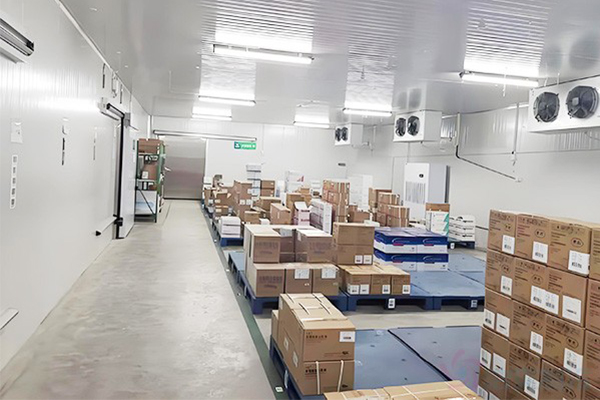
5. What factors affect the actual cost of the three types of cold storage?
Cold storage project costs typically comprise the insulated structure, refrigeration equipment, piping and valves, electrical control systems, transportation, installation, and commissioning. Key factors influencing the cost include:
Internal dimensions and effective storage volume;
Design storage temperature and ambient temperature at the project site;
Types of products to be stored or quick-frozen;
Product entry temperature, batch weight, and daily processing volume;
Time required to reach the target temperature;
Insulation panel material and thickness, and flooring structure;
Configuration of compressors, condensers, and air coolers (evaporators);
Piping distance between the condensing unit and the air cooler;
Inclusion of backup units and remote control systems;
Transportation, hoisting, taxes, and on-site construction conditions.
Relying solely on price quotes per square meter or cubic meter can lead to overlooking factors such as product thermal load and freezing time. For instance, consider two freezer warehouses of identical volume: one stores only pre-frozen products, while the other receives large quantities of meat at ambient temperature daily. The equipment configuration and total cost for these two facilities would differ significantly.
6. How should price comparisons be made for the three types of cold storage?
When comparing quotes for refrigerated storage, freezer storage, and quick-freezing facilities, first standardize the parameters—such as dimensions, design temperature, product entry temperature, daily processing volume, and scope of work. Then, verify details such as equipment models, cooling capacity under design operating conditions, insulation panel specifications, piping lengths, and electrical configurations.
Additionally, confirm whether the quote includes floor insulation, refrigerant, refrigeration oil, main power cables, equipment hoisting, transportation, installation and commissioning, and taxes. The total price is meaningful for comparison only when the technical specifications and scope of work are essentially the same.
In general, given comparable scale and configuration, the construction costs for cold storage facilities rank from highest to lowest in the order of blast-freezing rooms, freezing rooms, and refrigeration rooms. However, actual budgeting requires calculating the cooling load based on the specific product, processing volume, cooling time, and site conditions; costs cannot be determined solely by storage temperature or capacity.
FAqS
A blast freezing warehouse usually costs more because it requires lower temperatures, higher refrigeration capacity, and specialized freezing equipment.
Freezer warehouses require stronger insulation, more powerful refrigeration systems, and additional energy-saving measures to maintain lower temperatures.
The cost depends on storage temperature, warehouse size, insulation materials, refrigeration equipment, automation level, installation conditions, and project requirements.