 HAOCOOL

Why Are the Requirements for Medical Cold Chain Warehousing Higher?
The question of why medical cold chain warehousing demands higher standards frequently arises in the contexts of pharmaceutical distribution, vaccine storage, and the management of in vitro diagnostic reagents. Medical products are highly sensitive to temperature fluctuations; an unstable storage environment can compromise product quality and safety. Therefore, the construction of medical cold chain warehouses must go beyond mere considerations of cold storage area and equipment cost, focusing instead on temperature control precision, data logging, emergency safeguards, and management protocols.
1. Temperature Stability is Paramount in Medical Cold Chain Warehousing
While standard food cold storage focuses primarily on preservation or freezing effects, medical cold storage places greater emphasis on sustained temperature stability. Products such as pharmaceuticals, reagents, and vaccines typically require storage within specific ranges—such as 2–8°C, -20°C, or even lower temperatures. Different products cannot be mixed indiscriminately, and temperature zones must be clearly delineated.
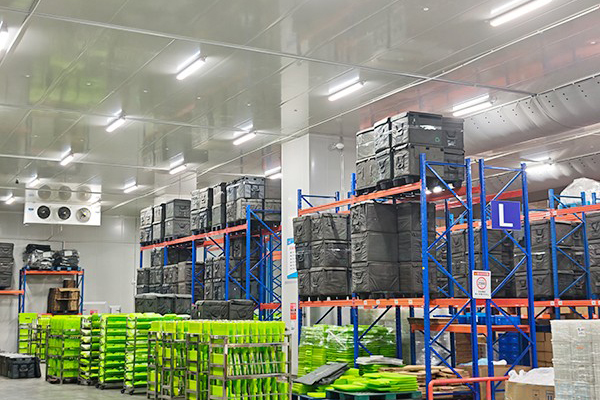
In the construction of medical cold chain warehouses, the refrigeration system must demonstrate high stability to prevent temperature fluctuations caused by frequent starting and stopping. Furthermore, the layout of air coolers and shelving units within the warehouse must be optimized to minimize localized over-cooling or "dead zones" where temperatures might deviate.
2. Stricter Requirements for Data Monitoring and Traceability
Medical cold storage facilities must not only be capable of cooling but also of monitoring, recording, and ensuring traceability. Temperature and humidity monitoring systems generally require continuous data collection and must include an alarm function for temperature excursions. The system should promptly alert management personnel to address issues such as power outages, equipment malfunctions, or warehouse doors being left open for extended periods.
This is a key factor distinguishing medical cold chain warehousing from standard warehousing. Comprehensive data records facilitate quality management and simplify future inspections and traceability.
3. Emergency Safeguards and Routine Management Cannot Be Overlooked
Given the high value and sensitivity of medical products, cold storage facilities must incorporate backup power supplies, alternative refrigeration solutions, and emergency transfer protocols. Mitigating quality risks arising from unforeseen events is particularly critical for products such as vaccines, blood products, and diagnostic reagents. Additionally, goods stored within the facility must be arranged to allow for proper airflow channels; they should not be placed directly against walls or cold air outlets. Standardized procedures must also be established for personnel access, temperature monitoring, and equipment maintenance.
Overall, the construction of medical cold chain storage facilities demands higher standards due to the unique nature of the products and the stringent quality liability involved. Long-term, stable operation can only be ensured by addressing multiple aspects, including design, equipment, monitoring, and management.
If you have upcoming requirements for medical cold chain storage construction, we invite you to consult with HAOCOOL. With 17 years of deep experience in the refrigeration industry and a network of over 18 domestic and international subsidiaries, we focus heavily on markets in Central and Southeast Asia. We have established local professional teams in regions such as Kazakhstan, Uzbekistan, and the Philippines to provide efficient, localized construction and on-site maintenance services. Serving a wide range of mainstream industries, we work with project investors, general contractors, and design firms. Guided by a "service-first" philosophy, we are steadily advancing our global expansion and offer complimentary customized smart cold storage solutions and project quotations.
FAqS
Medical products require strict temperature stability and environmental control to maintain safety, quality, and effectiveness throughout storage and transportation.
Key requirements include accurate temperature monitoring, reliable refrigeration systems, backup power supply, alarm systems, proper insulation, and compliance with medical storage standards.
Continuous monitoring, automatic temperature control, regular equipment maintenance, and reliable emergency systems help ensure safe storage conditions for medical products.